
On-Page SEO That Makes Every Page Work Harder
RawCode Tech improves the content, headings, titles and internal links on your website so visitors can find clear answers and search engines can better understand each page.
Start with your most important service, product or landing pages. We review what is holding them back and agree on the improvements that matter first.
Give Searchers a Clear Reason to Choose You
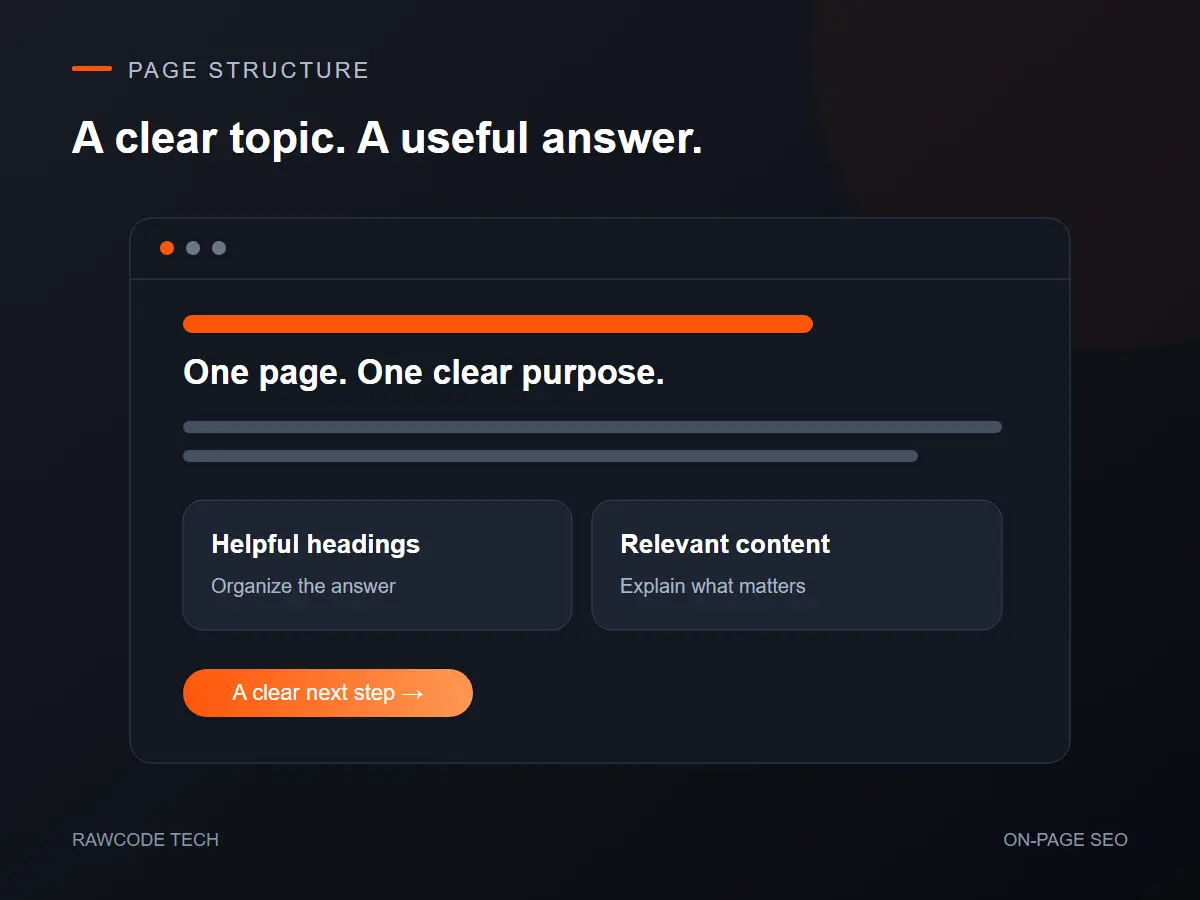
A page can look polished and still leave important questions unanswered. Visitors need to understand what you offer, who it is for and what to do next.
We bring the page topic, structure and message into focus. Clear headings, useful explanations and relevant calls to action help the page serve both search intent and your business goals.
Start With What Your Customers Are Searching For
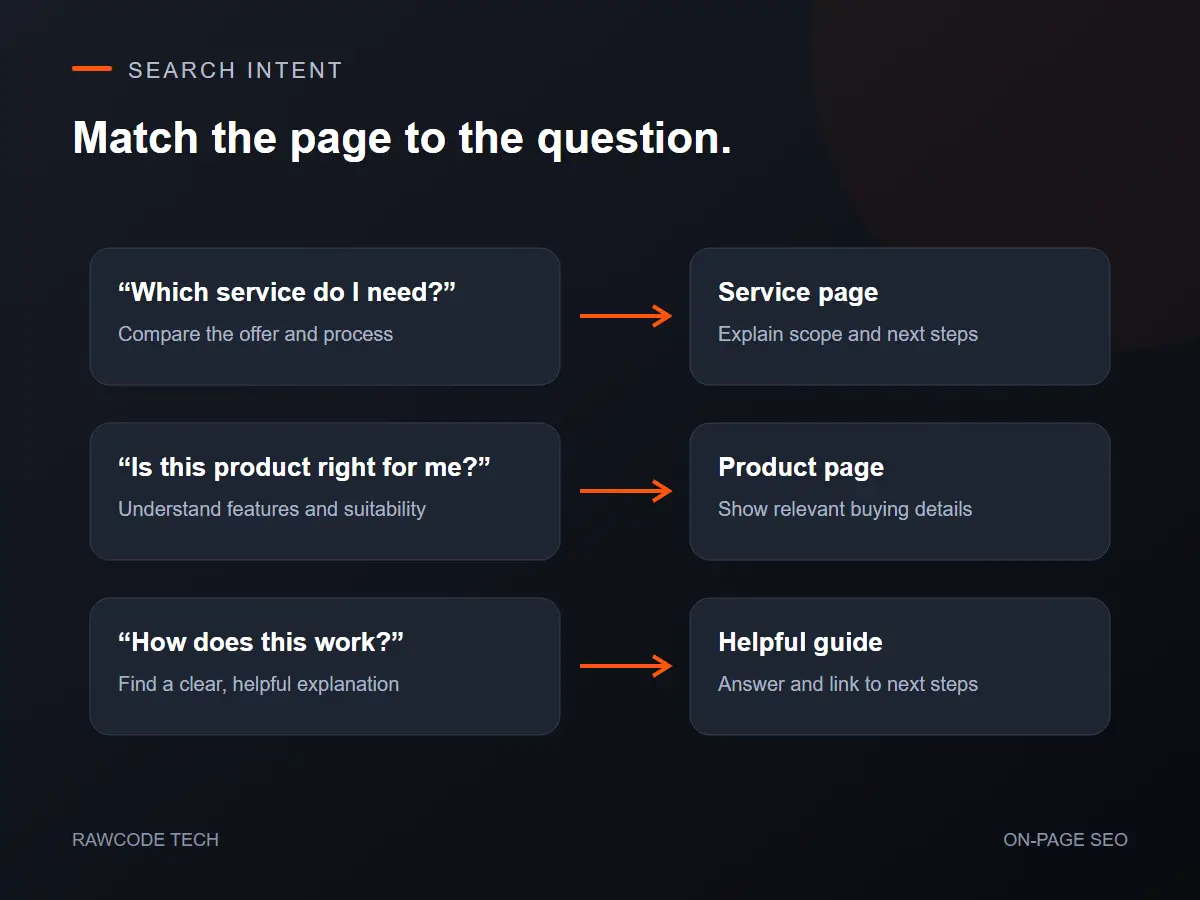
Effective on-page SEO starts with the purpose of the page. We review the searches relevant to your offer, the questions behind them and whether the current content gives a useful answer.
Service Pages: Explain the service, scope, process and next step for people evaluating a provider.
Product & Category Pages: Make features, options and buying considerations easier to understand.
Articles & Resources: Organize helpful information around a focused topic and connect it to related pages.
Keyword research guides the content; it does not replace clear writing. We prioritize relevant phrases and avoid forcing repeated keywords into every sentence.
Our On-Page SEO Services
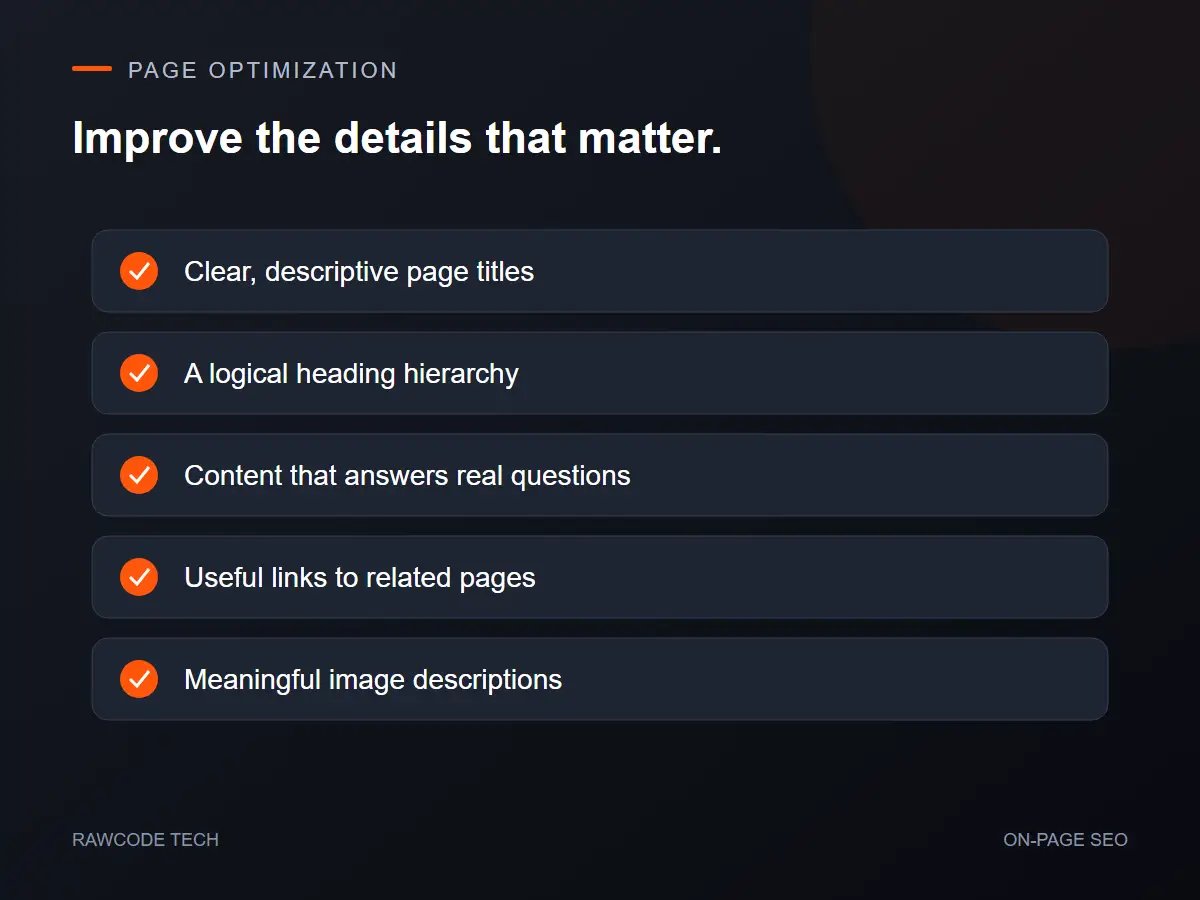
We review the elements you can improve directly on each page: its topic, title, description, headings, content, images and internal links.
The scope can cover a focused set of priority pages or a wider content review. Your proposal identifies the pages included, the changes we will make and where your approval is needed.
The Details That Make a Stronger Page
Each page should have a clear role in your website. We align its search topic, content and navigation, then review the details that help visitors understand it.
Keyword & Search Intent Mapping
Map a relevant primary topic and supporting phrases to each priority page. We consider intent and overlapping pages so the content has a clear purpose rather than competing with itself.
Page Titles & Meta Descriptions
Write descriptive, distinct page titles and useful meta descriptions that reflect the content. Search engines may generate their own result text, so we focus on accuracy and relevance rather than guaranteed snippets.
Headings & Content Optimization
Review the main heading, section hierarchy and coverage of the topic. We improve clarity, fill agreed content gaps and remove unnecessary repetition while preserving your brand voice.
Internal Linking & Page Structure
Connect relevant service pages, articles and resources with descriptive links. We make important next steps easier to find and review orphaned pages and confusing navigation paths.
Image Optimization & Alt Text
Review image filenames, dimensions, compression opportunities and alternative text. Meaningful images receive useful descriptions; purely decorative images should not add unnecessary screen-reader noise.
Useful Content, Written Around Real Questions
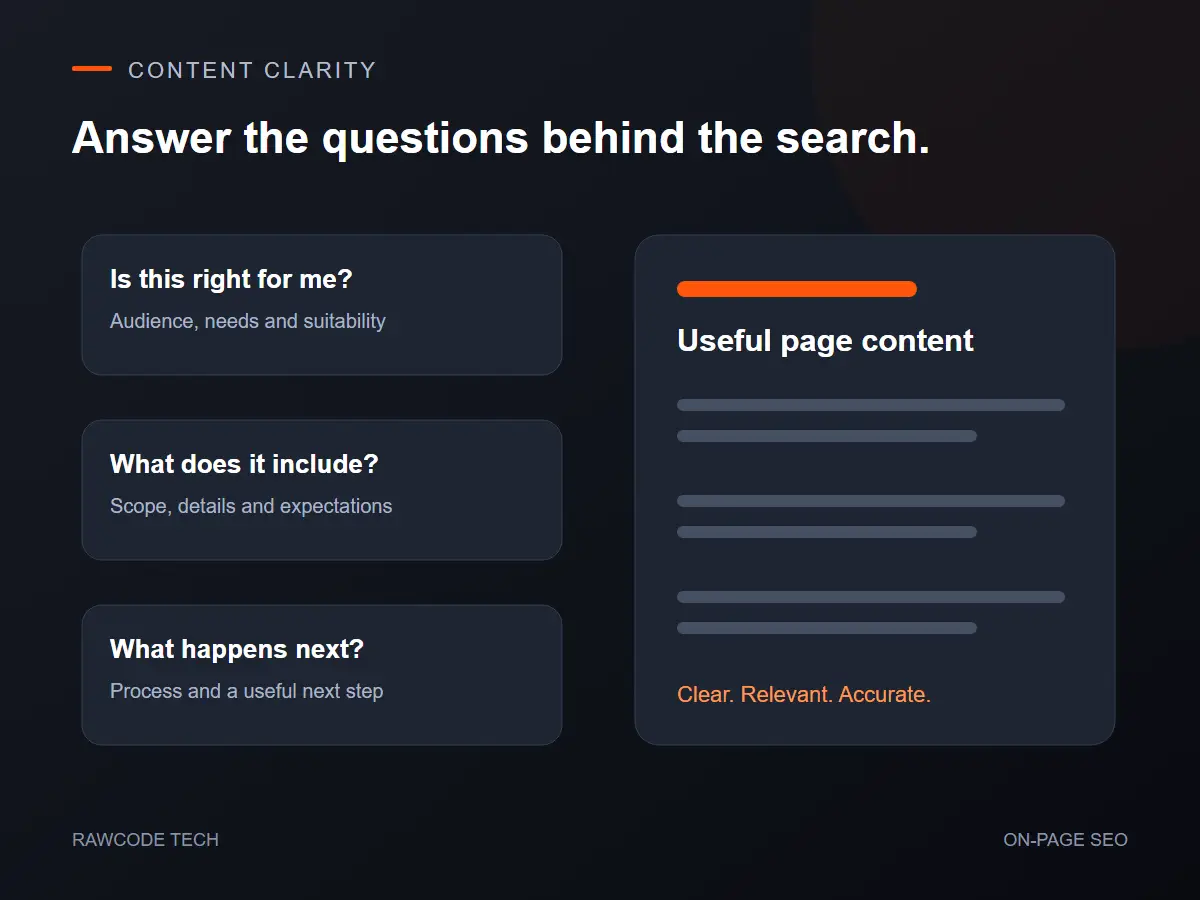
Your visitors may be comparing options, checking suitability or looking for a specific answer. We review whether the page explains the details they need before contacting you or making a purchase.
That can include clearer service descriptions, product information, process explanations and relevant FAQs. Recommendations are tied to the page purpose and the questions your audience asks.
Content editing and new copy are agreed before work begins. Your team reviews business-specific facts, claims and terminology so the final page stays accurate.
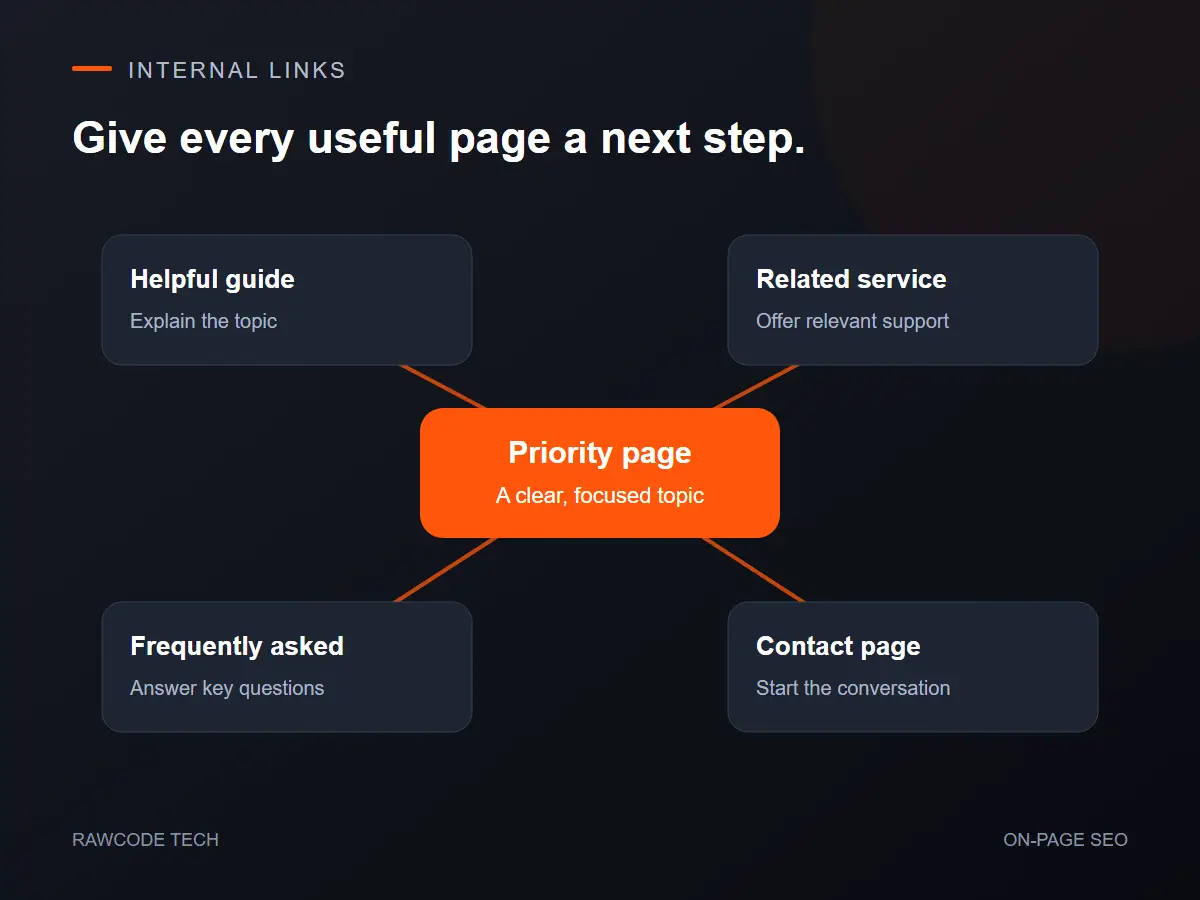
Connect Your Pages With Purpose
Internal links give visitors a path through related information. A helpful article can lead to a relevant service; a service page can lead to a supporting guide or contact option.
We review link relevance, anchor text and the relationship between priority pages. When changing an existing URL is necessary, redirect requirements are agreed before implementation to protect working links.
Measure Progress Beyond a Keyword Position
Where access and tracking are available, we review page-level search impressions, clicks and relevant enquiries or sales. These measures help show whether the right audience is finding the page and taking useful next steps.
We document the changes and establish a baseline for follow-up review. Search performance depends on competition, site health and other factors, so on-page improvements do not come with a guaranteed ranking.
Depending on the agreed scope, our review covers:
- Search intent and page topic alignment
- Titles, descriptions and heading hierarchy
- Useful content and relevant internal links
- Image descriptions and optimization opportunities
- Page-level search data and agreed conversion measures
From Page Audit to Practical Improvements
A clear sequence keeps the work focused on the pages that matter and gives you defined points to review the changes.
01
Audit & Prioritize
Review the current pages, business goals and available search data. Identify gaps and agree on a priority page list and implementation scope.
02
Research & Map
Research relevant topics and search intent. Map them to the agreed pages and prepare recommendations for content, headings, titles and links.
03
Optimize & Review
Update the agreed page elements and content. Business-specific details and substantial copy changes go through your review before approval.
04
Check & Measure
Check the live changes, internal links and page structure. Record the work and review available search and conversion data at the agreed follow-up point.
What Your On-Page SEO Project Includes
Your proposal confirms the page count, content responsibilities, implementation access and review stages. Depending on the agreed scope, deliverables can include:
- A page audit and prioritized action list
- Keyword and search intent mapping for agreed pages
- Updated titles, descriptions and headings
- Agreed content edits and internal link improvements
- Image alt text and optimization recommendations
- A change log and measurement baseline
The quote depends on the number of pages, research depth, content changes and implementation requirements. We confirm what is included and how feedback will be handled before the work starts.
New long-form content, link building, technical development and ongoing SEO management are scoped separately where needed. Recommendations outside the agreed page work are identified clearly.
On-Page SEO FAQs
The agreed scope can cover keyword mapping, page titles, meta descriptions, headings, content improvements, internal links and image alt text. Your proposal specifies the pages and implementation work included.
Yes. We can work with your existing service, product, category or article pages. We first review the current content and available search data, then agree on the changes and approval process.
Content editing or new copy can be included when agreed in the scope. Larger content projects are quoted separately. Your team approves business-specific information and claims before publication.
On-page SEO focuses on the content and elements of individual pages. Technical SEO covers wider crawling, indexing and infrastructure issues. We flag technical blockers during the review and scope that work separately if needed.
No. Search rankings depend on competition, website quality, technical health and other signals. We focus on useful improvements, documented work and relevant performance measures.
The schedule depends on the page count, research requirements, content readiness and access to your website. We provide a project-specific timeline after reviewing the scope. Search results can take longer to reflect the changes.
Ready to Improve the Pages You Already Have?
Share your website and the pages you want to improve. We will review the goals, define the scope and recommend a practical starting point.
For a wider search strategy, explore our Search Engine Optimization service.